


The vast majority of pet owners in America feed their pets commercially prepared pet foods. When choosing a pet food, one of the first considerations is what type of food should be fed: dry, semi-moist, or canned. With hundreds of choices available, all of which are claiming to be the best one for your pet, choosing the best pet food can be a very confusing endeavor. When I do nutritional consults with clients that are trying to choose the best pet food, many of them are concerned with how the foods are made. Once owners understand how a pet food is manufactured, it makes it easier for many of them to choose the type of food to use. This article will discuss the basic manufacturing processes for dry, semi-moist, and canned foods that are widely used by the pet food industry in the United States.
Dry foods make up the bulk of pet food sales in the U.S., and there are several ways that dry food can be made including baked, pelleted, or extruded. For all three, much of the process is similar except for the final pressing and cooking process, so the majority of this article will discuss the most commonly available type: extruded. While there are as many variations in the processing and manufacturing of dry pet foods as there are companies making them, this article will describe the basic manufacturing process that most companies follow.
Raw materials
The manufacturing of pet food begins with assembling the raw materials. Most raw materials are grain, meat, and fat that arrive in train cars or semi-trucks in loads weighing between 10,000 and 40,000 pounds. Concentrated vitamins and minerals often arrive in 25- to 50-pound bags. Once the raw materials arrive, they are stored in appropriate holding areas, with most grains being held in silos.
Grinding process
The raw materials are ground to the correct particle size. The grinding will increase the availability of nutrients, as well as improve the ease in which they are processed. A commercial hammer mill is often used to grind the particles to the proper size. Most dry mixes are ground to a consistency of coarse flour. A uniform size is very important for proper water absorption and cooking.
Compounding and mixing
Proper mixing of all the ingredients is very important to create a consistent product. If the mix is not thoroughly blended, the essential nutrients could be excessive or absent in individual pieces of the finished product. A very large ribbon blender is used to mix batches of up to 2,000 pounds at a time. At this initial mixing, only the dry ingredients are included and then the dry mix is stored until the next step can be completed.
Extrusion process
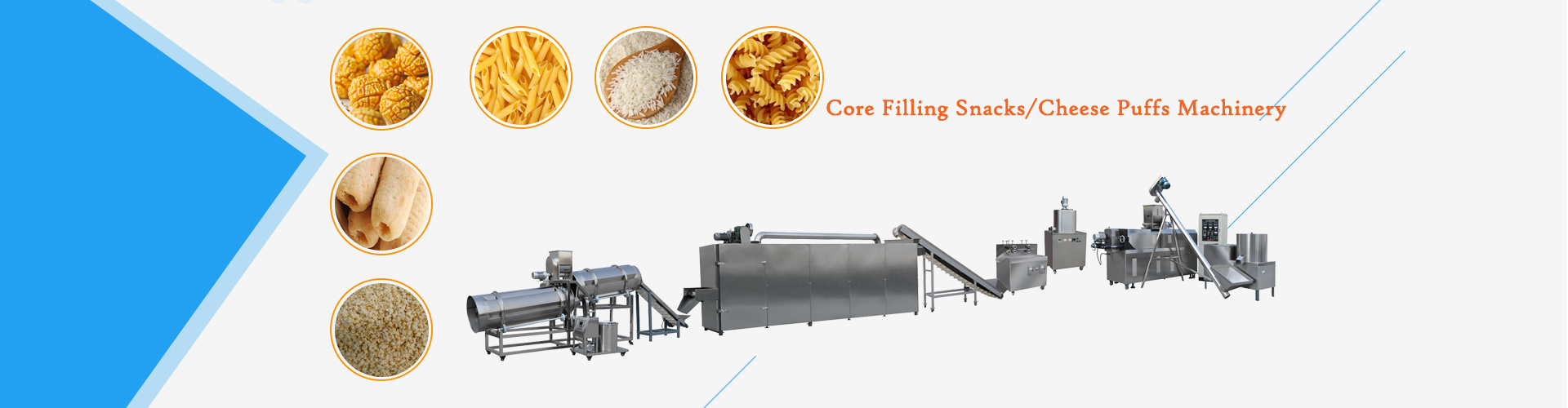
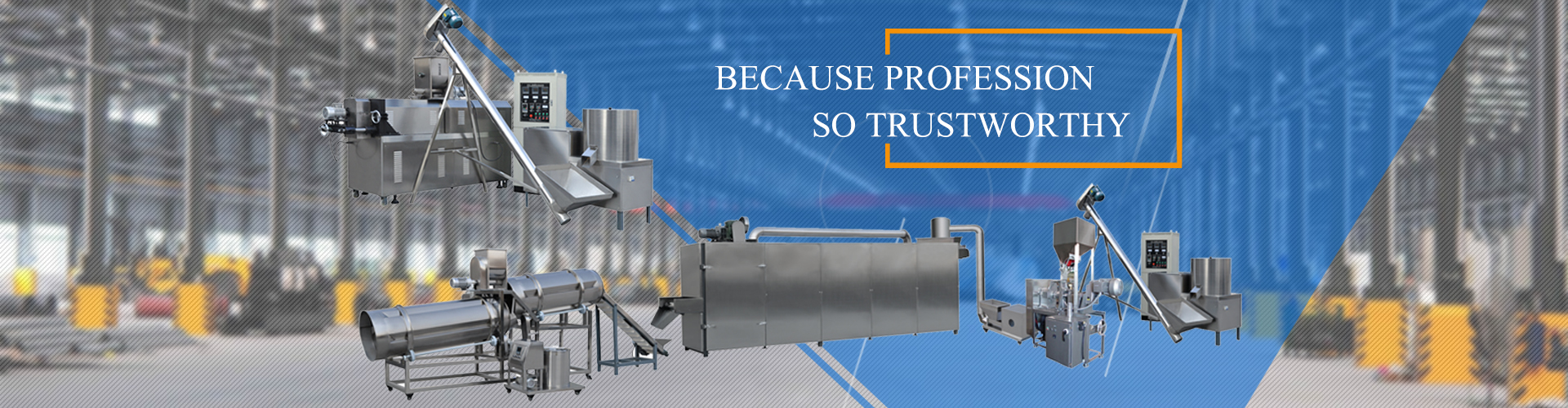
The extrusion process is very similar to the process of bread making: mixing, kneading, proofing (rising), shaping, rising again, and slicing. The dry mix is first preconditioned to start the gelatinization of the starches. The preconditioner, very accurately, measures the amount of the dry mix and blends it with the measured liquid portion that can include fat, meat products, additional water, and steam. This wet mix stays in the preconditioner for about 45 seconds. While in the preconditioner, the starch is cooked about 25%. The preconditioned food then moves to an extruder. Extruders were originally designed for the plastics industry, but are now used by 90% of pet food manufacturers. The extruder consists of a cylindrical multi-segmented barrel with a screw that propels, mixes, and further cooks the material, and then forces it through a die where it is cut to the desired length by a knife. The product moving through the extruder produces its own friction and heat, which then cooks the mix. The speed and friction levels can be varied depending on the formula, to ensure that the product is cooked at the right temperature for the right length of time.
Drying and cooling
The newly-formed kibbles, which are soft and spongy, are then transferred from the extruder to the dryer where additional moisture is removed. Most kibble takes about 15 minutes to dry properly. If kibble is dried too quickly or at too high of a temperature, it will be more fragile and will break during handling, creating a high level of 'fines' (very small particles of food, which often settle to the bottom of the bag/box).
The kibble then goes through a cooling process of around 7 minutes. If the kibble is too hot when it leaves the dryer and is packaged before it cools, condensation will develop, which will encourage the growth of mold or bacteria.
Enrobing
Enrobing is the last step in the manufacture of dry pet foods, and entails the addition of either liquids or powders to the outer surface of the kibble. Fat and flavor enhancers are usually added at this stage. Fat is not usually added in the mixing stage because it can disrupt starch gelatinization. Fat and flavor enhancers greatly improve taste and palatability, and are most effective when applied to the outside of the kibble.
Most semi-moist foods are manufactured in a manner similar to dry foods, with a few changes. The product is formulated, mixed, and passed through an extruder just like dry food. When semi-moist foods are produced, the extruders are configured at a lower temperature and pressure than dry foods. When the product leaves the extruder it is not dried, but instead, goes through low-agitation coating drums where water, humectants (chemicals that help to maintain moisture), and acids are added. After leaving the coating drums, the food then goes into a refrigerated cooler to set the structure so it will maintain a higher moisture content and spongy texture.
Semi-moist foods are higher in moisture (25-35%) than dry foods (approximately 10%) and are therefore more likely to experience spoilage from mold and bacteria. The high moisture content also makes semi-moist foods susceptible to moisture loss and a deterioration of texture. To combat these problems, semi-moist foods are formulated with mold and bacterial inhibitors and packaged in special moisture-proof bags.
Canned foods
The process of canning foods was first developed in 1809 for use by the French Army. Since then, the process has made many improvements to improve quality, but the basic principles remain the same. Sealing a food product in a can and then heat-sterilizing it continues to be one of the most common and affordable ways of preserving food products for both people and animals.
Raw ingredients and grinding
Most canned foods contain a high level of meat products as their base. Fresh and frozen meat and meat by-products arrive in frozen or refrigerated truck loads. The meat product is ground into small pieces and then carefully weighed and added to a batch mix that also includes vitamins, minerals, and sometimes grains.
Mixer/cooker
After the ingredients are combined, they go into the mixer where they are thoroughly blended. While the product is being mixed, the temperature is increased so that the starch in the food begins to gelatinize and the protein begins to denature, which improves texture and flavor. Foods that contain carbohydrates generally require a higher temperature to fully cook the starch. Once the product has been properly cooked, it then moves on to the canning process.
Filling and sealing
While the cooked mixture is still hot, the product moves into the filler/seamer machine. This machine fills,
places the lids on, and seams from 300 to 600 cans a minute. Steam is blown over the top of the filled can as
the lid is applied to maintain the heat, so that when the can cools, it will be vacuum-sealed to help prevent spoilage.
Sterilizing
Once the cans are filled and sealed, they move into the sterilizer where they are heated to temperatures of 121° Celsius for at least three minutes to ensure that the dangerous bacteria are killed. The bacteria that are of the highest concern are the Clostridium botulinum bacteria which are destroyed at temperatures above 116° Celsius. Once the cans have been properly sterilized, they are cooled, labeled, and ready for sale.
Summary
Understanding the manufacturing process of commercial pet foods can help pet owners choose the best type of food for their pet. Once owners choose the type of food they want to feed, they can pick a quality manufacturer and then closely examine the product line and the individual ingredients to determine the most nutritious and palatable food for their pet. While the manufacture of pet food can seem complex, it is actually very similar to the way human food is manufactured. Reputable manufacturers go

